

News

22nd May 2025 · Products & Services
A homeowner’s guide to bulk aggregates
Embarking on a home renovation project, whether it’s extending your living space, revamping your garden, or creating a new driveway, is an exciting prospect. While your mind might immediately jump to paint colours or landscaping aesthetics, the success and longevity of your project often lie in the unseen foundations. These foundations are frequently built with the help of aggregates. They are the fundamental building blocks that underpin many successful renovation projects, offering versatility and essential support for achieving durable and structurally sound results.
This guide will delve into the world of bulk aggregates, explaining what they are, how they’re used in various home renovation projects nationwide, and why considering them, especially when bought in larger quantities, is a smart move for any homeowner.
What exactly are aggregates?
At their core, aggregates can be defined as the granular materials used in construction. These hard, mineral materials form the very basis of many construction materials, providing the necessary bulk and strength. There is an extensive range of aggregates on the market which vary in size, ranging from the fine grains of sand (typically less than 4mm in diameter) to much larger pieces of crushed stone (with gravel reaching up to 80mm and crushed rock even larger). This grading by size is a crucial aspect that determines which aggregate is best suited for specific applications.
Aggregates usually come from quarries, where various types of rock, such as limestone, sandstone and igneous rock are extracted using heavy machinery, often involving controlled explosions, before being processed through crushing machines to achieve the desired sizes. Following the crushing process, the materials are then passed through screens to separate them into specific size grades, ensuring consistency for their intended uses.
Additionally, natural deposits like sand and gravel pits are also significant sources. These are often extracted using simpler methods like loaders or excavators.
An increasingly important source of aggregates is construction and demolition waste. These recycled aggregates are produced by reprocessing materials from old buildings, roads and other construction projects. A recent report from the Mineral Products Association (MPA) suggests that the recovery of construction, demolition, and excavation wastes (CDEW) such as concrete and brick rubble, old rail track ballast, and earthworks spoil, yielded 60.3 million tonnes of recycled aggregates in a year.
The use of recycled aggregates is gaining traction due to its significant environmental benefits, contributing to a more sustainable construction industry by reducing the demand for newly extracted resources and minimising the amount of waste sent to landfill. At Titan Concrete, we have a designated wash plant where the waste material collected from our customers’ construction sites is screened and crushed to produce gravel, contributing to the recycling of rubble.
Finally, manufactured aggregates (sometimes known as secondary aggregates) are by-products of various industrial processes, such as slag from steel production or ash from coal-fired power stations.


What types of aggregates are used in home renovations?
For homeowners undertaking refurbishment work, the main types of aggregates you’ll likely encounter can be broadly categorised into natural and recycled options. Natural aggregates, also known as primary aggregates, are those virgin materials extracted directly for construction purposes. These include:
- Sand, which comes in different varieties like sharp sand (ideal for mixing concrete or laying paving slabs due to its larger grains), building sand (a finer type perfect for mortar), and sometimes even recycled sand obtained from washing concrete.
- Gravel, which can form naturally through the weathering of rocks by water or collisions, or it can be produced by crushing larger rocks. It’s available in various sizes, such as pea gravel (often 10-20mm, popular for decorative purposes and drainage) and larger gravel (like 20mm, suitable for driveways).
- Ballast, a mixture of sand and gravel, is often used for foundations. Gravel is characterised by its small, rounded stones.
- Crushed stone is produced by mechanically crushing large rocks (like granite, limestone, sandstone or other igneous rocks) into smaller, angular pieces in quarries. Its angular shape allows for better interlocking, making it ideal for sub-bases and driveways. A common example relevant to homeowners is MOT Type 1, which has a particle size range from dust up to 40mm and is widely used as a sub-base due to its excellent load-bearing capabilities.
Why are aggregates needed?
Aggregates play a vital role in a wide spectrum of domestic projects, providing the essential support from the very foundations up to the final decorative touches. When it comes to laying solid foundations and sub-bases for extensions, patios, sheds and driveways, aggregates are indispensable. They create a stable, load-bearing layer that ensures proper load distribution and overall stability for the structure. Often, aggregates are easier to compact than the existing soil, leading to a more solid and supportive base. MOT Type 1, a crushed rock or concrete material with a specific size grading (0-40mm), is a go-to choice for creating this robust sub-base, particularly for paving projects like driveways and roads, thanks to its excellent compaction properties.
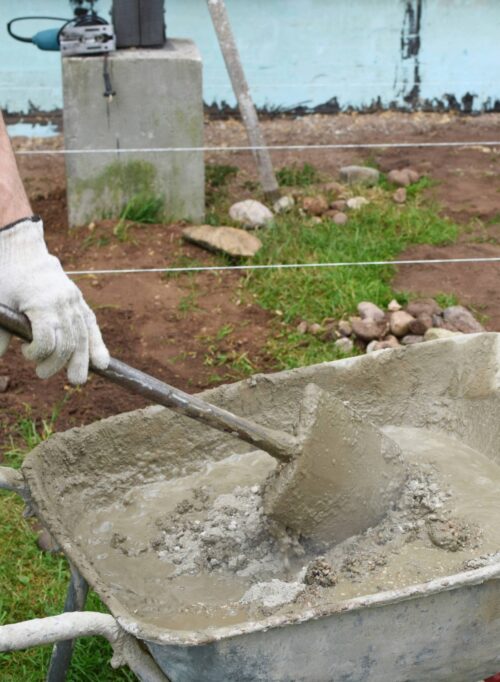
Aggregates also form the backbone of strong concrete, making up a significant portion of the mix (typically 60-80% by weight or volume). They provide the essential bulk and strength to the concrete, directly influencing its load-bearing capacity.
In concrete mixtures, a distinction is made between fine aggregates such as sand and coarse aggregates such as gravel, with the specific proportions depending on the desired properties of the final concrete. For instance, granite, known for its hardness and frost resistance, is often chosen for high-grade concrete used in foundations and other structural elements. The fine aggregate, sand, plays a role in filling the voids between the coarser aggregates, contributing to a denser and stronger mix.
Creating permeable surfaces
When it comes to creating beautiful and functional driveways, patios, and pathways, aggregates offer a wide range of options. Gravel, available in a spectrum of colours and sizes (from 6mm to 20mm and beyond), is a popular choice for both decorative purposes and for creating permeable surfaces for footpaths and driveways.
For driveways, angular aggregates like crushed stone are often preferred as they compact together more effectively, reducing the likelihood of ruts forming under vehicle tires. It’s important to remember that for driveways and patios, a stable and well-draining sub-base, often made of aggregates like MOT Type 1 or crushed concrete, is crucial for the longevity and performance of the surface, even beneath decorative layers.
Providing all-important drainage
Ensuring effective drainage is another critical area where aggregates excel. Aggregates like gravel, crushed stone, and clean stone (which has been screened to remove fine particles) are essential for creating pathways for water to move freely. This is vital for preventing water buildup around foundations, which can lead to dampness and structural damage.
Different sizes of drainage aggregate are often used for specific purposes; for instance, 10mm aggregate is commonly used for pipe bedding to provide support and drainage around pipes, while 20mm or larger aggregate might be preferred for soakaways.
Adding to the aesthetics
Finally, aggregates play a significant role in adding the finishing touches with landscaping. Decorative aggregates, such as pebbles (available in various colours and textures like Scottish cobbles), slate chippings (in shades like plum, blue, and green) and different types of gravel (including golden gravel, dove grey limestone, or black ice gravel) are widely used to enhance the aesthetic appeal of garden paths, borders, rockeries and water features.
Beyond their visual appeal, these aggregates offer practical benefits like suppressing weed growth and requiring minimal maintenance, providing a year-round attractive landscape.


Why choose bulk aggregates?
For larger renovation projects, buying aggregates in bulk can be a very cost-effective strategy. While the initial outlay might seem significant, purchasing bulk aggregates from a local supplier such as ourselves generally results in a lower cost per unit volume compared to buying numerous smaller bags from retail outlets. Bulk aggregates are typically costed in tonnage and delivered in large ‘bulk bags’ (often 800-1000kg), providing substantial cost savings due to a lower price per unit and reduced delivery fees, as fewer trips are needed. Furthermore, having the entire quantity on-site from the outset enhances time efficiency by preventing delays waiting for multiple smaller deliveries, ensuring your project can proceed smoothly without interruption. It also simplifies site management and reduces packaging waste, making for a more economical and environmentally friendly approach to your home improvement ambitions.
How Titan Concrete can support you
From establishing a robust sub-base to creating a stunning decorative finish, aggregates are undeniably the unsung heroes of successful home renovation projects. Understanding their types, uses and the significant advantages of buying bulk aggregates empowers you to make informed decisions that ensure the durability of your domestic project.
Ready to lay the groundwork for your next big project? Contact us for reliable, high-quality bulk aggregate delivery direct to your home. Whether you need MOT Type 1 for a new driveway, sharp sand for your patio or decorative gravel for your garden, we have the right materials and the logistical expertise to get them to you efficiently and affordably.
Latest News


Friendly & efficient delivery service

Highest quality aggregates & concrete

Yard collection available on every product

Bespoke service tailored to your needs

Concrete Calculator
Knowing how much concrete you need is important when placing your order. Use our handy pre-mix concrete calculator to estimate the quantity of ready mixed concrete you require for your project.